EN
EN ES
ES DE
DE
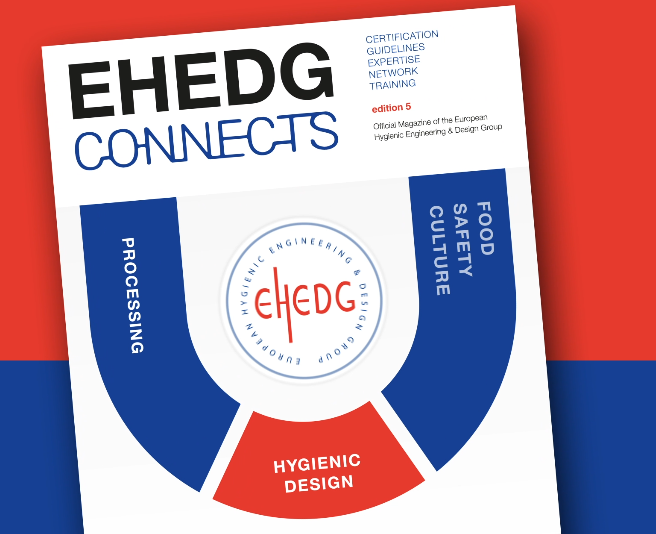
EHEDG White Paper 'Impact of Hygienic Engineering and Design on Sustainability in Food Production' | Now available
EHEDG has published a foundational White Paper on Sustainability, connecting hygienic engineering and design to key sustainability objectives in the food sector. Led by a diverse group of experts from leading companies and academia, this initiative outlines how hygienic design can drive reductions in energy, water, chemicals, and product waste — without compromising food safety.
Why a Sustainability Focus?
Historically, EHEDG has concentrated on food safety through hygienic design. But industry demands are shifting. According to Ludvig Josefsberg, Chair of the EHEDG Working Group ‘Sustainability’ and former EHEDG President: “A more sustainable operation will likely be more efficient. So, the natural entry point was to explore the links between hygienic engineering and design and sustainability — always taking food safety as a given.”
This White Paper marks the first structured EHEDG initiative to formalise those links, laying the groundwork for future standards, guidance, and training.
What’s Inside the White Paper?
The Working Group focused on four key sustainability elements where hygienic design can have the greatest impact:
- Energy consumption
- Water usage
- Chemical inputs
- Product loss and waste
As Georg Kalss, Co-Chair and Materials Science Principal at Bühler Group, explains: “Sustainability ultimately means reducing the greenhouse gases needed to produce a unit of food. It’s a clear metric that links directly to operational efficiency.”
The team chose the dairy sector as a focus for its relevance to EHEDG’s existing work and the applicability of its findings. The content combines company expertise, literature research, and examples of best practices from EHEDG members including Bühler, Tetra Pak, Ecolab, Unilever, Danone, and BOKU University.
Who Should Read It?
The White Paper is aimed at EHEDG’s 800+ members, particularly:
- Equipment manufacturers
- Food producers
- Academic researchers
It also serves as an invitation to non-member companies exploring how hygienic design contributes to environmental goals and production efficiency.
The EHEDG White Paper on Sustainability is available now at www.ehedg.org. It’s an essential read for professionals committed to future-ready, hygienic, and environmentally responsible food production.
We would like to thank all the other contributors: Bengt Eliasson & Ludvig Josefsberg (Tetra Pak), Felix Schottroff (BOKU), Hui Zhang & Subhash Yadav (Unilever), Javier Lemus (ACO), Julien Jouvin (Ecolab), Francisco Blanco (Danone), Lajla Bøtter-Jensen (FORCE Technology), Matti Heide (TU Dresden), Georg Kalss (Bühler Group) & Maxime Paraud (Definox).